
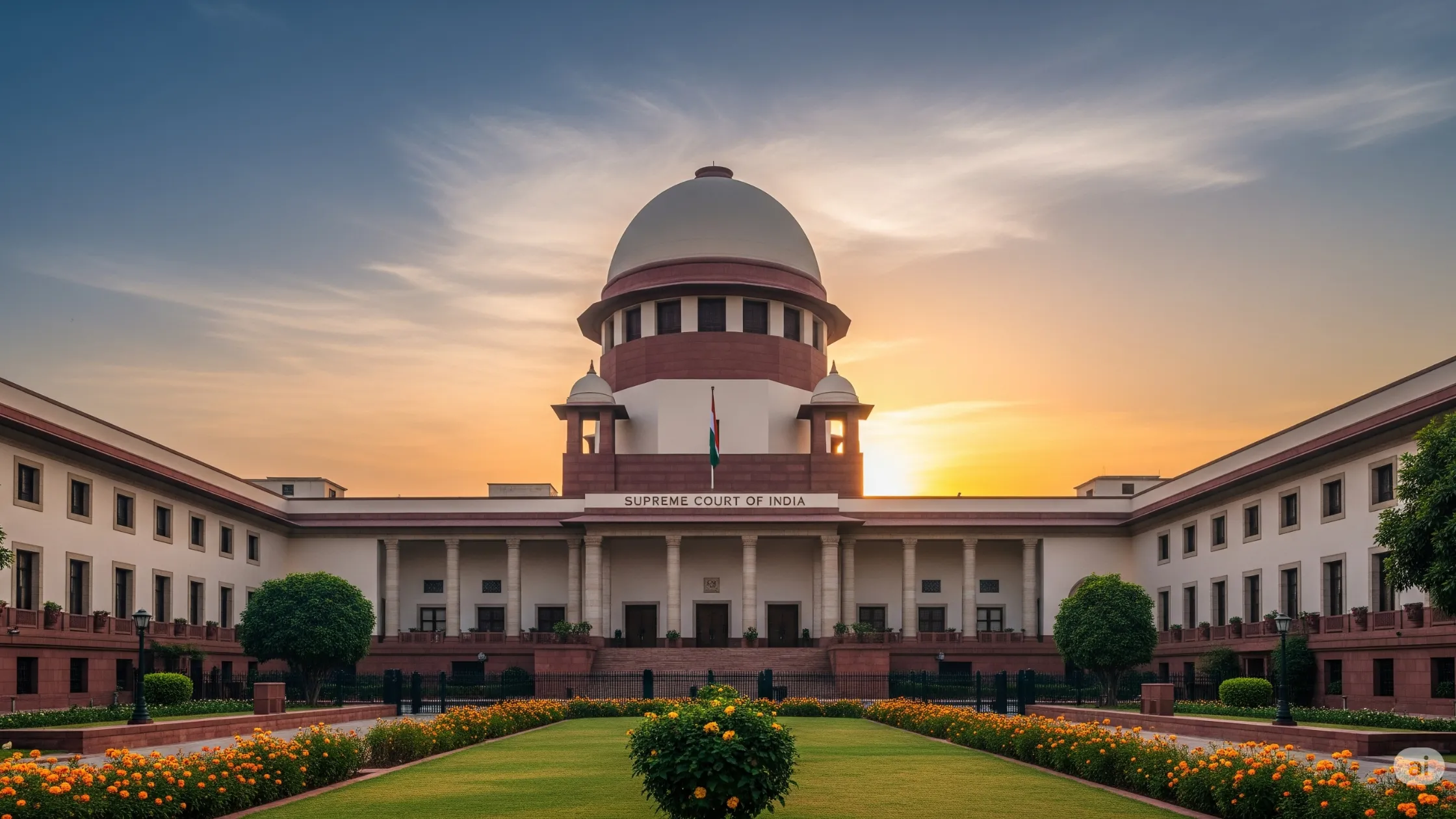

In a significant constitutional development, the Union government informed the Supreme Court that neither the Centre nor state governments can challenge actions of the president or governors in relation to bills. Appearing before a five-judge Constitution Bench led by Chief Justice BR Gavai, Solicitor General Tushar Mehta argued that Articles 32 and 361 of the Constitution prevent governments from questioning such decisions. The debate stems from delays in granting assent to bills, with the Court earlier setting timelines to avoid prolonged inaction. The case highlights a critical constitutional tension between legislative functioning and executive discretion, raising questions about accountability, federalism, and the balance of powers.
Centre’s Stand: No Locus for Governments Under Article 32
- Solicitor General Tushar Mehta argued that fundamental rights under Article 32 are conferred only upon individuals, not governments.
- Thus, neither the Union nor states can approach the Supreme Court under Article 32 to challenge the conduct of constitutional authorities like governors or the president.
- The Centre emphasised that only individuals, when their rights are infringed, can invoke Article 32 remedies.
Constitutional Immunity Under Article 361
- Article 361 grants complete immunity to the president and governors for acts carried out in discharge of their constitutional duties.
- This immunity includes decisions relating to the assent or withholding of assent to bills.
- The Centre argued that such immunity prevents judicial review of these authorities’ actions, protecting the separation of powers.
Supreme Court’s Concerns Over Indefinite Delays
While acknowledging constitutional immunity, the Bench questioned whether governors or the president could indefinitely delay action on bills.
- Chief Justice Gavai asked if constitutional authorities could sit on bills “for time immemorial.”
- The Court noted that the framers used the phrase “as soon as possible” in Articles 200 and 201, ensuring timely decision-making.
- This echoes the Court’s April 2024 ruling directing governors and the president to act within a reasonable timeframe—three months for the president under Article 201.
Background: Tamil Nadu Case and Presidential Reference
- The issue originated from Tamil Nadu’s petition after Governor RN Ravi withheld action on several bills for over three years.
- In April 2024, the Supreme Court held that “deemed assent” would apply in cases of prolonged inaction.
- In May 2024, President Droupadi Murmu referred the matter under Article 143(1) for the Court’s advisory opinion, making it a question of broad constitutional importance.
Implications for Federalism and Governance
This legal debate has far-reaching consequences:
- For State Governments: It limits their recourse to challenge governors’ delays directly in court.
- For Legislatures: It underscores the need for timely assent to uphold legislative intent.
- For Constitutional Law: It raises questions about the balance between immunity and accountability.
Key Takeaways
- Centre argues governments cannot file pleas under Article 32 against president/governor actions.
- Article 361 provides immunity to constitutional heads for duties like bill assent.
- Supreme Court questions indefinite delays in approving bills.
- April 2024 ruling mandated timelines and introduced “deemed assent.”
- Presidential reference under Article 143(1) seeks clarity on governor/president powers.
Closing Note
The Supreme Court’s final opinion on this issue will be pivotal in shaping the boundaries of executive immunity and legislative rights. With growing friction between governors and state governments, the verdict will set the tone for centre-state relations and the constitutional principle of accountability in governance.
FAQ
Q1: Can state governments challenge governors’ delays in granting assent to bills?
No. The Centre told the Supreme Court that governments cannot challenge governors’ or the president’s actions under Article 32, since it applies only to individuals.
Q2: What does Article 361 of the Constitution say?
Article 361 provides complete immunity to the president and governors from being questioned in court for acts performed while discharging their constitutional duties.
Q3: What is the Supreme Court’s April 2024 ruling on bill assent delays?
The Court held that governors and the president must act within a reasonable timeframe. For the president, Article 201 mandates action within three months. It also introduced the concept of “deemed assent” for prolonged inaction.
Q4: Why did President Droupadi Murmu refer the matter to the Supreme Court?
In May 2024, she invoked Article 143(1), which allows the president to seek the Supreme Court’s advisory opinion on important constitutional issues, including the April ruling on bill assent.
Q5: What are the implications of this case for Indian federalism?
The case defines the balance between executive immunity and legislative accountability, impacting centre-state relations and how quickly bills passed by legislatures become law.